

When people think about weight loss, they often picture intense gym workouts, running, or exhausting cardio sessions. But exercise doesn’t have to be extreme to become part of a healthy lifestyle.
Tai Chi is a gentle, low-impact form of movement that combines controlled body movements, balance, posture, breathing, and mindful attention. Because it is generally gentle on the body, it may appeal to people who prefer a slower and more sustainable approach to physical activity.
So, can tai chi help with weight loss?
Research suggests that Tai Chi may contribute to improvements in body composition and waist circumference in some adults, although the effects are generally modest and Tai Chi should not be considered a stand-alone weight-loss solution. (PubMed)
The bigger picture is important: sustainable weight management usually involves a combination of regular physical activity, balanced nutrition, adequate sleep, and other healthy lifestyle habits.
In this guide, we’ll explore Tai Chi for weight loss, what Tai Chi walking means, how it compares with regular walking, and how beginners can incorporate it into an active lifestyle.
Diet Plan For Weight Loss in just 10 days
What Is Tai Chi?
Tai Chi is a traditional Chinese mind-body exercise involving a series of slow, controlled movements.
Unlike high-impact workouts, Tai Chi generally emphasizes:
- Slow and controlled movement
- Balance
- Coordination
- Posture
- Weight shifting
- Relaxed breathing
- Mindful movement

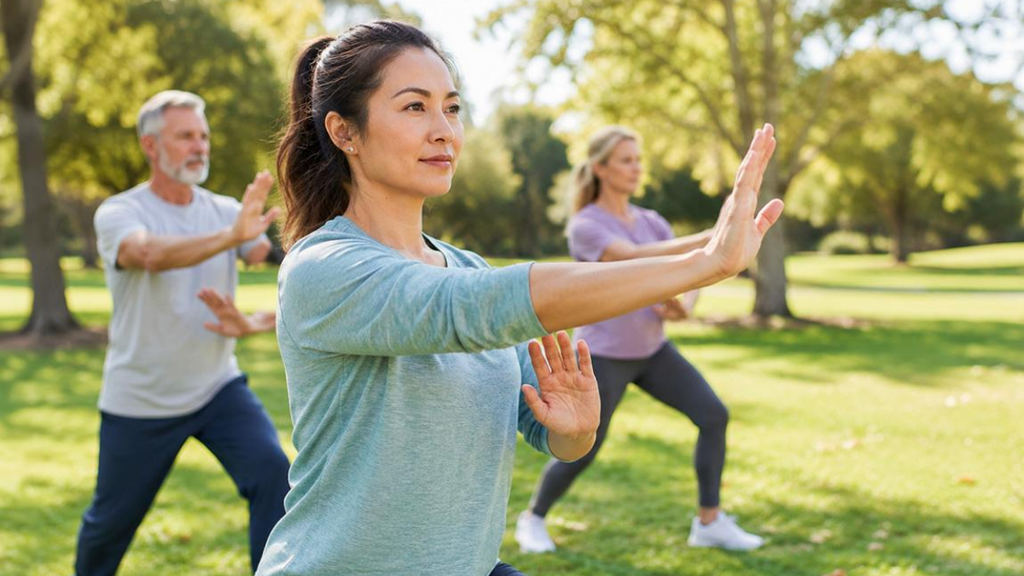
Because the movements are typically gentle and controlled, Tai Chi can be an appealing activity for people who don’t enjoy high-impact exercise.
It is also easy to practice without expensive gym equipment.
However, “gentle” doesn’t mean “useless.” Tai Chi still requires your body to move, stabilize, coordinate, and maintain different positions.
Can Tai Chi Help With Weight Loss?
Yes, Tai Chi can potentially contribute to weight management, but it shouldn’t be viewed as a magic weight-loss exercise.
Research has found evidence that Tai Chi and related mind-body movement practices can influence some body-composition measures. A systematic review and meta-analysis of randomized controlled trials found improvements in body composition in some studies, although the researchers also noted substantial variation between studies.
Another systematic review and meta-analysis published in 2023 found significant effects of Tai Chi on measures including BMI and body fat, along with improvements in balance and flexibility.
There is also research specifically examining Tai Chi and central obesity. In a randomized controlled trial involving adults aged 50 and older with central obesity, both Tai Chi and conventional exercise produced reductions in waist circumference and body weight compared with the control group. (PubMed)
However, these findings don’t mean that doing Tai Chi automatically causes significant weight loss.
Your results depend on many factors, including:
- Your overall diet
- Total physical activity
- Exercise intensity
- Exercise frequency
- Sleep
- Age
- Starting body composition
- Individual metabolism
- Consistency
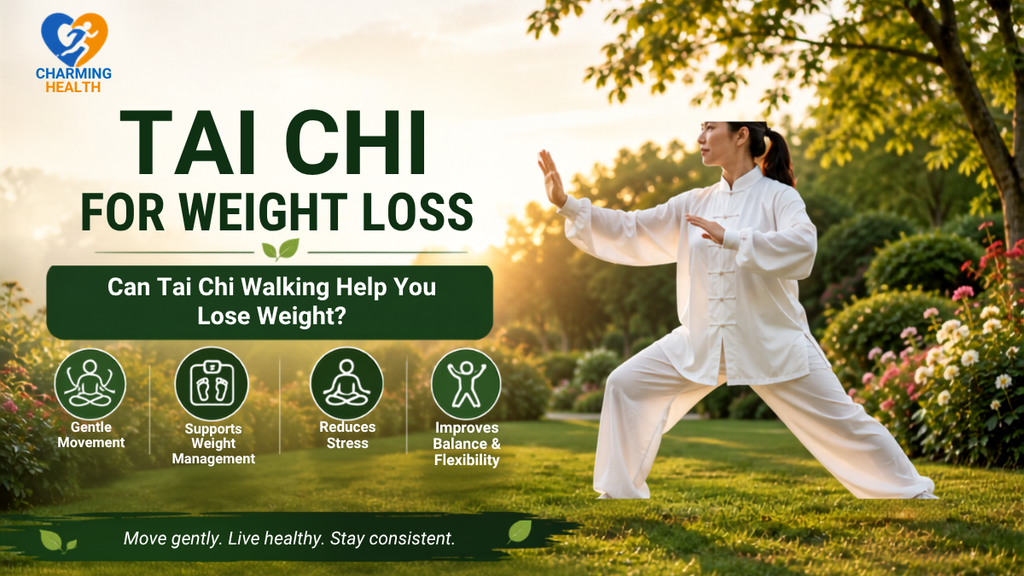
The key takeaway
Tai Chi can be one piece of a healthy weight-management routine.
It works best when combined with an overall healthy lifestyle rather than being treated as a quick fix.
What Is Tai Chi Walking?
One of the interesting trends you’re seeing in Google Trends is “tai chi walking.”
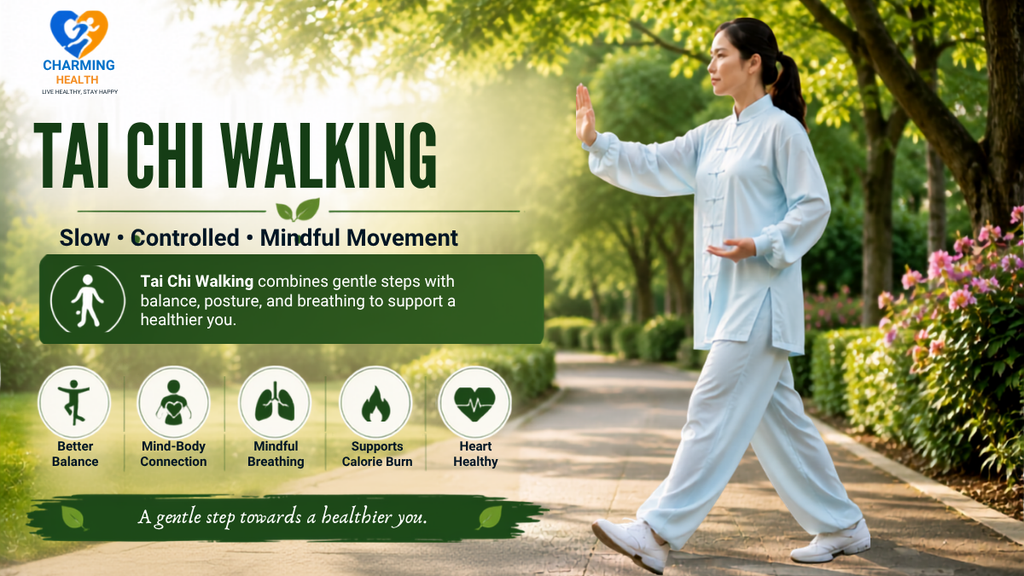
Tai Chi walking refers to slow, deliberate walking movements inspired by Tai Chi principles.
Instead of simply moving from one point to another, the emphasis may be placed on:
- Balance
- Posture
- Controlled weight shifting
- Deliberate steps
- Coordination
- Relaxed movement
- Mindful attention
This makes Tai Chi walking different from ordinary walking.
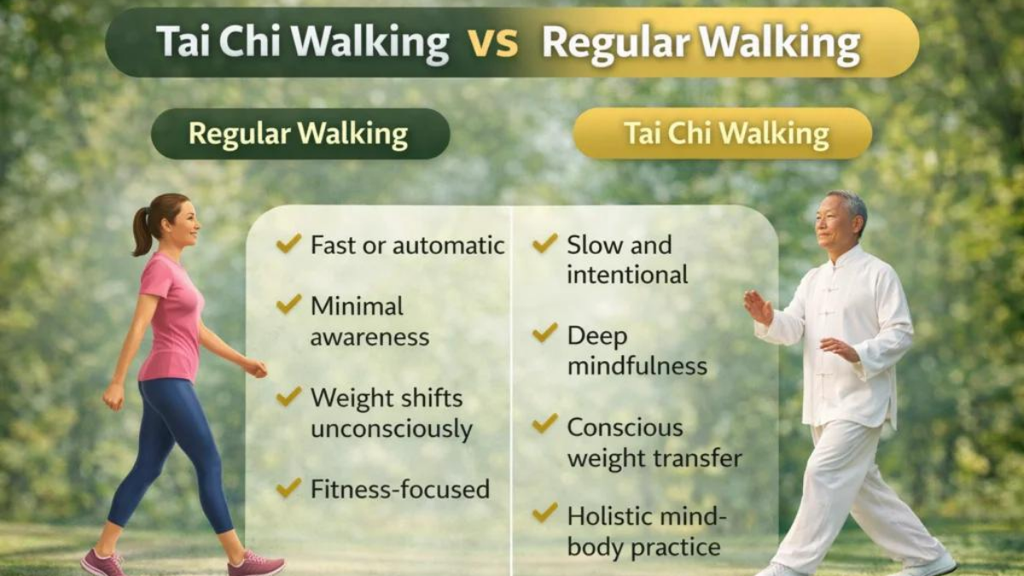
Regular walking
You typically walk at a natural or purposeful pace.
Tai Chi walking
You deliberately control each movement, paying more attention to balance, posture, weight transfer, and coordination.
Both can have a place in a healthy lifestyle.
Tai Chi Walking for Weight Loss: Does It Work?
Tai Chi walking can contribute to an active lifestyle, but it should not be promoted as a special method for rapidly burning body fat.
One randomized controlled trial compared Tai Chi and self-paced walking in middle-aged adults. After 12 weeks, both groups experienced modest reductions in body weight and fat mass, with the walking group showing somewhat greater average changes. (PubMed)
This is useful because it highlights an important point:
You don’t necessarily have to choose between Tai Chi and walking.
You can use both.
For example:
Morning: 15–20 minutes of Tai Chi
Evening: 20–30 minutes of walking
This creates a combination of controlled movement and more traditional aerobic activity.
7 Potential Benefits of Tai Chi
Tai Chi offers more than a possible role in weight management.
1. It Encourages Regular Movement
One of the biggest challenges with exercise is consistency.
An activity that you enjoy and can maintain may be more useful in the long term than an intense workout routine that you quickly abandon.
Tai Chi provides a way to add movement to your day.
2. It Supports Balance and Coordination
Tai Chi places considerable emphasis on controlled weight shifting, posture, and balance.
Research has found benefits for balance and physical fitness in adults practicing Tai Chi. (PubMed)
This makes balance-focused movement particularly interesting for people who want to include more functional movement in their routine.
3. It Is a Low-Impact Form of Exercise
Some people don’t enjoy running or other high-impact workouts.
Tai Chi offers a gentler alternative.
That doesn’t mean it replaces every type of exercise, but it can be one option for people looking for gentle exercise for weight loss and overall wellness.
4. It Can Complement Walking
Walking is one of the simplest ways to increase daily physical activity.
The CDC recommends that adults aim for at least 150 minutes of moderate-intensity aerobic activity per week, along with muscle-strengthening activities on at least two days per week. Brisk walking is one example of moderate-intensity activity. (CDC Stacks)
Tai Chi can complement this routine rather than replacing every other form of exercise.
5. It Encourages Mindful Movement
Tai Chi combines physical movement with attention to breathing, body position, and controlled motion.
For many people, that mindful aspect is part of what makes the practice enjoyable.
A sustainable exercise routine isn’t only about calories burned.
Enjoyment, consistency, and lifestyle fit matter too.
6. It Can Support Physical Fitness
A systematic review of randomized trials found evidence that Tai Chi can improve several aspects of physical fitness, including balance, body composition, and flexibility. (PubMed)
However, the amount of benefit can vary between individuals and different Tai Chi programs.
7. It May Support Healthy Aging
Tai Chi’s emphasis on balance, coordination, and controlled movement makes it particularly interesting as part of an active lifestyle for adults as they age.
Older adults are also encouraged to include activities that address balance alongside aerobic and muscle-strengthening activities. (CDC Stacks)
Tai Chi vs Walking for Weight Loss
If your goal is weight management, should you choose Tai Chi or walking?
The answer doesn’t have to be one or the other.
| Feature | Tai Chi | Walking |
| Impact | Generally low | Generally low |
| Movement speed | Slow and controlled | Adjustable |
| Balance focus | High | Moderate |
| Cardio potential | Usually lower | Can be moderate or higher with brisk walking |
| Equipment | Usually none | Comfortable shoes |
| Beginner friendly | Yes | Yes |
| Outdoor option | Yes | Yes |
| Weight-management role | Supporting activity | Useful aerobic activity |
| Mind-body focus | High | Variable |
| Can be combined? | Yes | Yes |
Which burns more calories?
The answer depends on how each activity is performed.
A brisk walk generally produces more aerobic demand than very slow Tai Chi.
That’s one reason Tai Chi shouldn’t be presented as a replacement for all forms of physical activity.
Instead, consider combining different types of movement.
Tai Chi and Walking: A Simple Combination
One of the most practical approaches is to combine both activities.
For example:
Monday
20–30 minute walk
Tuesday
15–20 minutes Tai Chi
Wednesday
20–30 minute walk
Thursday
15–20 minutes Tai Chi
Friday
30-minute walk
Saturday
Tai Chi + easy walk
Sunday
Rest or gentle movement
This is simply an example, not a personalized exercise prescription.
Your routine should be adjusted according to your fitness level, schedule, and physical abilities.
Can Tai Chi Reduce Belly Fat?
This is an important question because many people searching for tai chi for weight loss are specifically interested in belly fat.
The short answer:
Tai Chi cannot specifically target belly fat.
Your body doesn’t allow you to choose exactly where you lose fat.
However, overall physical activity can contribute to healthy weight management and reductions in abdominal fat when combined with appropriate nutrition and other lifestyle habits. The Physical Activity Guidelines note that physical activity can help with weight management and reduce abdominal fat. (CDC)
Interestingly, research specifically examining Tai Chi in adults with central obesity found reductions in waist circumference after a 12-week intervention. (PubMed)
So instead of thinking:
“How can I burn belly fat with Tai Chi?”
Think:
“How can I build a sustainable lifestyle that supports a healthy body weight?”
That is a much more useful long-term approach.
How to Start Tai Chi for Weight Loss
If you’re completely new to Tai Chi, don’t worry about mastering complicated movements immediately.
Start simple.
Step 1: Find a Comfortable Space
You don’t need a large gym.
A quiet garden, park, backyard, or open room can work well.
Step 2: Wear Comfortable Clothing
Choose clothing that allows you to move freely.
You generally don’t need specialized equipment.
Step 3: Begin With Basic Movements
Start with simple movements and learn the correct technique before progressing.
If possible, beginners may benefit from learning from a qualified Tai Chi instructor.
Step 4: Focus on Balance
Pay attention to how you shift your weight from one foot to another.
Don’t rush.
Step 5: Keep Your Breathing Comfortable
Tai Chi generally incorporates relaxed, controlled breathing.
Don’t force your breathing or hold your breath.
Step 6: Practice Consistently
A short routine that you actually maintain can be more useful than a long routine you only do occasionally.
How Long Should You Do Tai Chi for Weight Loss?
There isn’t a single magic number of minutes that guarantees weight loss.
Instead, consider your total weekly activity.
For general health, U.S. physical-activity guidelines recommend adults get 150–300 minutes of moderate-intensity aerobic activity per week, or an equivalent combination of moderate and vigorous activity, plus muscle-strengthening activity on at least two days each week. (CDC Stacks)
Tai Chi can be included as part of your broader movement routine.
For example:
Tai Chi + walking + strength training + everyday movement
can create a more complete approach than relying on Tai Chi alone.
Is Tai Chi Good for Beginners?
Yes, Tai Chi can be a beginner-friendly form of movement because many routines emphasize slow, controlled movements rather than fast or high-impact exercise.
If you’re new to exercise, start gradually.
You don’t need to perform complicated sequences on your first day.
Focus on:
Posture → Balance → Controlled movement → Consistency
If you have an injury, significant balance problems, or a medical condition that affects exercise, talk with an appropriate healthcare professional before beginning a new exercise program.
5 Tips to Make Tai Chi Part of Your Weight-Loss Routine
1. Don’t Depend on Tai Chi Alone
Use it as one component of an active lifestyle.
2. Add Walking
Regular walking can provide more moderate-intensity aerobic activity.
3. Pay Attention to Nutrition
Exercise is only one part of weight management.
Build meals around nutritious foods such as vegetables, fruits, whole grains, protein sources, and other minimally processed foods that fit your dietary needs.
4. Focus on Consistency
Don’t worry about having a perfect workout every day.
Build a routine you can maintain.
5. Think Long-Term
Healthy weight management is not about losing weight as quickly as possible.
It’s about creating habits that you can continue.
Tai Chi + Walking: A Simple Healthy-Lifestyle Routine
Here’s a simple way to combine the two.
Morning 🌿
10–20 minutes of Tai Chi
During the day
Take short movement breaks instead of sitting continuously.
Evening 🚶
20–30 minute walk
Throughout the day
Stay hydrated and choose balanced meals.
Weekly
Add appropriate strength-training activities.
This approach is much more realistic than searching for a single exercise that promises rapid weight loss.
What About Tai Chi for Belly Fat?
If you’re specifically searching for Tai Chi for belly fat, remember that reducing abdominal fat isn’t about performing a particular movement that targets your stomach.
Instead, focus on the bigger picture:
Regular movement + balanced nutrition + adequate sleep + sustainable habits
Tai Chi may be one form of movement within that lifestyle.
Research has shown promising effects of Tai Chi on waist circumference in some populations, but individual results can vary. (PubMed)
Common Mistakes to Avoid
Mistake 1: Expecting Rapid Weight Loss
Tai Chi isn’t a miracle weight-loss method.
Mistake 2: Only Focusing on Exercise
Nutrition, sleep, daily activity, and lifestyle habits all matter.
Mistake 3: Comparing Yourself With Other People
Your starting point is different from someone else’s.
Mistake 4: Doing Too Much Too Soon
Start gradually and build your routine.
Mistake 5: Ignoring Technique
Tai Chi is about controlled movement.
Quality matters more than rushing through movements.
Frequently Asked Questions About Tai Chi for Weight Loss
Does Tai Chi help with weight loss?
Tai Chi may contribute to weight management and has been associated with modest improvements in body composition and waist circumference in some research. However, it should be combined with an overall healthy lifestyle rather than relied upon as a stand-alone weight-loss method. (PubMed)
Is Tai Chi walking good for weight loss?
Tai Chi walking can be a gentle way to add movement and practice balance and coordination. For weight management, it can complement activities such as regular or brisk walking.
Is Tai Chi better than walking for weight loss?
Not necessarily. Walking, particularly brisk walking, can provide greater aerobic activity, while Tai Chi emphasizes controlled movement, balance and coordination. Combining both can be a practical approach.
Can Tai Chi reduce belly fat?
Tai Chi cannot specifically target belly fat. However, research has found reductions in waist circumference in some Tai Chi studies. (PubMed)
How long should I do Tai Chi for weight loss?
There is no universal duration that guarantees weight loss. Start with a manageable amount and gradually build your overall physical-activity routine.
Is Tai Chi good for beginners?
Tai Chi can be suitable for beginners because its movements are generally slow and controlled. Beginners should start gradually and consider instruction from a qualified teacher.
Does Tai Chi burn calories?
Yes, Tai Chi involves physical movement and therefore uses energy, but the amount varies depending on the style, duration, intensity and individual. It generally should not be compared with vigorous cardio as a calorie-burning exercise.
Can I do Tai Chi and walking together?
Yes. Tai Chi and walking can complement one another. Tai Chi can provide balance-focused, controlled movement while walking can provide additional aerobic activity.
Final Thoughts
Tai Chi for weight loss is an interesting approach for people who want a gentler form of movement.
Research suggests that Tai Chi may provide modest benefits for body composition and waist circumference, while also supporting aspects of physical fitness such as balance and flexibility. (PubMed)
But the most important lesson isn’t that Tai Chi is a secret weight-loss exercise.
It’s that movement doesn’t have to be extreme to become part of a healthy lifestyle.
If you enjoy Tai Chi, make it part of your routine.
If you enjoy walking, keep walking.
And if you enjoy both, combine them.
A sustainable approach might look like:
Tai Chi + walking + nutritious food + strength training + good sleep + consistency.
That’s a much more realistic path toward long-term health and weight management than searching for a single “best” exercise.
Start where you are. Move a little more. Stay consistent.