


Losing weight does not have to mean eating bland food, skipping meals, or completely eliminating carbohydrates. A better approach is to build meals around protein-rich foods, vegetables, fruits, whole grains, legumes and healthy fats while keeping portions appropriate for your individual needs.
This 7-day weight loss meal plan from Charming Health is designed to give you simple, satisfying meal ideas that can fit into a healthy lifestyle. It includes eggs, chicken, fish, lentils, chickpeas, yogurt, vegetables, fruit and whole grains, with a few Pakistani-style meals included to make the plan more practical.
A healthy eating pattern emphasizes nutrient-dense foods such as protein, vegetables, fruits, whole grains and healthy fats while limiting highly processed foods, added sugars and refined carbohydrates. (Health Promotion Office)
Important: This is a general meal-planning guide, not a personalized diet prescription. Your calorie and portion requirements depend on factors such as age, sex, height, weight, activity level and health conditions.
How This Meal Plan Supports Healthy Weight Loss
Successful weight management is about more than simply eating less. A sustainable plan should provide nutritious foods while helping you maintain an appropriate calorie intake.

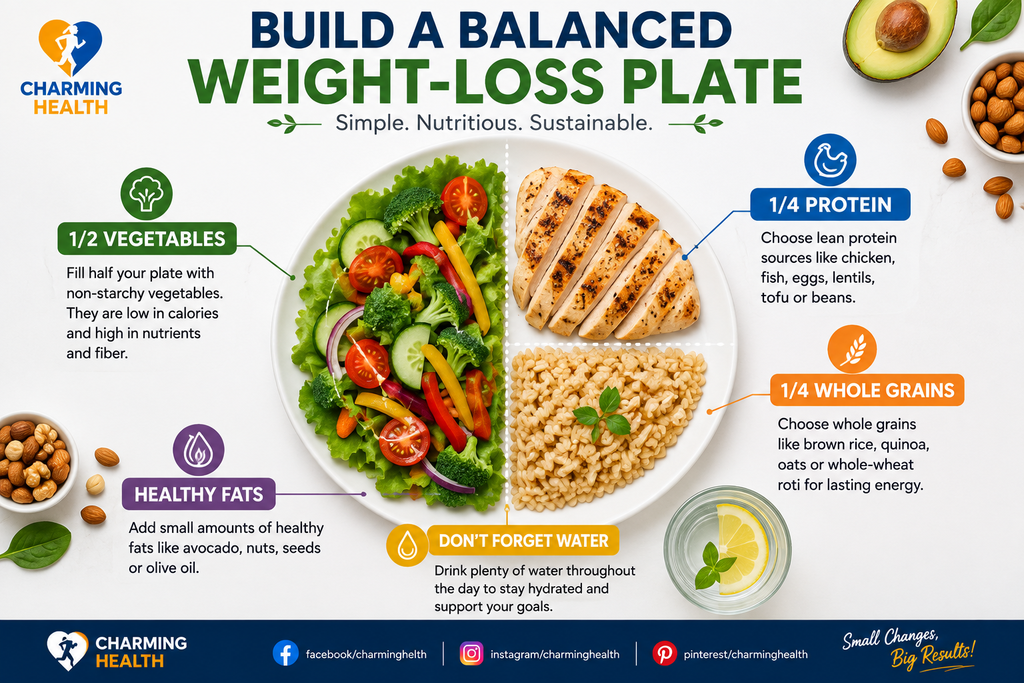
This meal plan focuses on:
1. Protein at Every Meal
Eggs, chicken, fish, Greek yogurt, lentils, chickpeas and other protein foods can make meals more satisfying while helping you maintain a balanced diet.
Current U.S. dietary guidance emphasizes a variety of protein foods, including seafood, poultry, eggs, beans, peas, lentils, nuts, seeds and soy foods. (CDC)
2. Fiber-Rich Foods
Vegetables, fruits, oats, beans, lentils, chickpeas and whole grains provide fiber and add volume to meals.
Fruits and vegetables also contain water and fiber, which can help you feel full while eating fewer calories. (CDC)
3. Balanced Carbohydrates
You don’t need to eliminate rice, potatoes, oats or roti to lose weight.
Instead, choose sensible portions and pair carbohydrates with protein and vegetables. Whole grains generally provide more fiber and protein than refined grains. (MedlinePlus)
4. Less Added Sugar and Highly Processed Food
Sugary drinks, sweets, chips, pastries and highly processed snacks can make it easier to consume excess calories.
The current Dietary Guidelines for Americans emphasize whole, nutrient-dense foods and recommend limiting highly processed foods, added sugars and refined carbohydrates. (Health Promotion Office)
7-Day Weight Loss Meal Plan
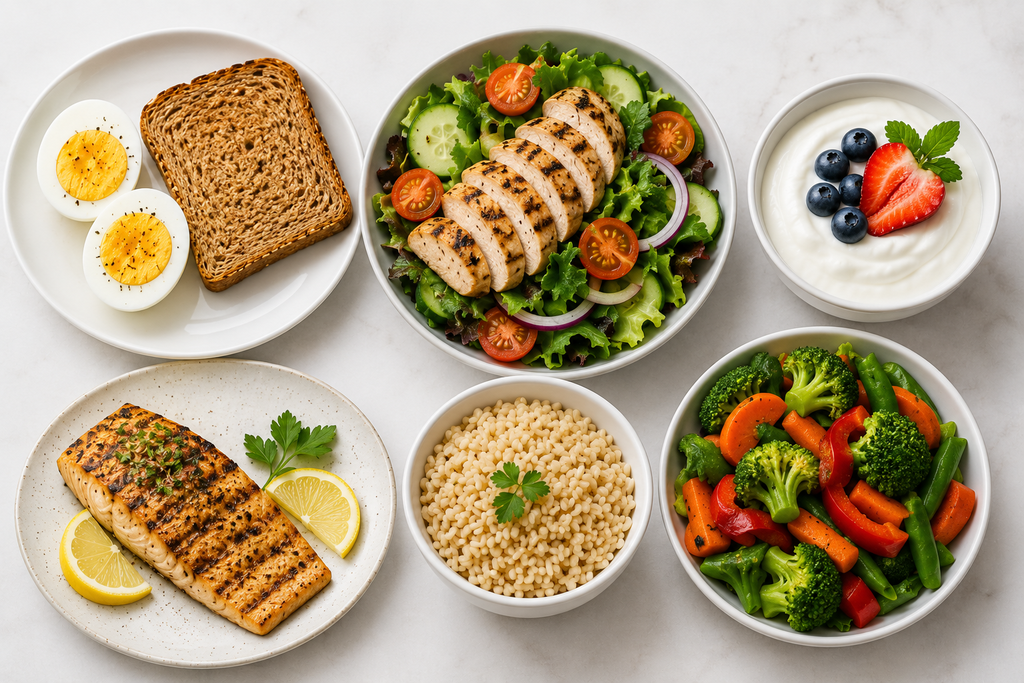
Day 1 — High-Protein Start
Breakfast
- 2 boiled eggs
- 1 slice whole-grain toast
- 1 small apple or ½ cup berries
- Unsweetened tea or coffee
Lunch
Grilled Chicken Salad
- 100–120 g grilled chicken breast
- 2 cups mixed greens
- Cucumber
- Tomato
- Carrot
- ½ cup chickpeas
- Lemon juice
- 1 teaspoon olive oil
Snack
- ¾ cup plain Greek yogurt
- 1 small piece of fruit
Dinner
- 120–150 g grilled chicken or fish
- ½ cup cooked brown rice
- 1–2 cups steamed vegetables
- Side salad
Day 1 Tip
If you are still hungry, increase your non-starchy vegetables before increasing calorie-dense foods.
Day 2 — Fiber-Focused Day
Breakfast
Overnight Oats
- ½ cup oats
- ¾ cup plain Greek yogurt
- 1 tablespoon chia seeds
- ½ cup strawberries
- Cinnamon
Lunch
Chickpea & Vegetable Bowl
- ¾ cup cooked chickpeas
- Cucumber
- Tomato
- Carrots
- Leafy greens
- ½ small whole-wheat roti or pita
- Lemon-yogurt dressing
Snack
- 1 orange
- 10–12 almonds
Dinner
Chicken Vegetable Stir-Fry
- 120 g chicken breast
- Broccoli
- Bell peppers
- Carrots
- Zucchini or other vegetables
- ½ cup cooked brown rice
Looking for more healthy breakfast ideas? Explore our guide to 10 Best Breakfast Foods for Weight Loss.
Day 2 Tip
Keep washed vegetables and ready-to-eat fruit available so healthy snacks are easy to reach for.
Day 3 — Protein + Balanced Carbs
Breakfast
Vegetable Omelet
- 2 eggs
- Spinach
- Tomato
- Onion
- 1 small whole-wheat roti
Lunch
Chicken Whole-Wheat Wrap
- 100–120 g grilled chicken
- Whole-wheat wrap
- Lettuce or spinach
- Tomato
- Cucumber
- 2 tablespoons plain yogurt dressing
Snack
- 1 apple
- 1 tablespoon natural peanut butter
Dinner
Lean Chicken Keema
- 100–120 g lean chicken mince
- Tomato, onion and spices
- ½–¾ cup cooked rice
- Large serving of mixed vegetables
- Fresh salad
Day 3 Tip
You don’t need to completely remove carbohydrates. Portion size and the overall balance of the meal matter.
Day 4 — Mediterranean-Inspired
Breakfast
Greek Yogurt Bowl
- ¾–1 cup plain Greek yogurt
- ½ cup berries
- 1 tablespoon chia seeds
- 1 tablespoon chopped walnuts
- Cinnamon
Lunch
Tuna or Chickpea Salad
Choose one:
- Tuna packed in water
OR
- ¾ cup chickpeas
Add:
- Mixed greens
- Cucumber
- Tomato
- ¼ avocado
- Lemon juice
- Herbs and spices
Snack
- 1 pear
- 10 almonds
Dinner
Baked Fish & Vegetables
- 120–150 g baked fish
- ½ cup cooked quinoa or brown rice
- Roasted vegetables
- Green salad
Day 4 Tip
Use herbs, lemon, garlic, black pepper and spices to add flavor without relying heavily on creamy sauces or excess oil.
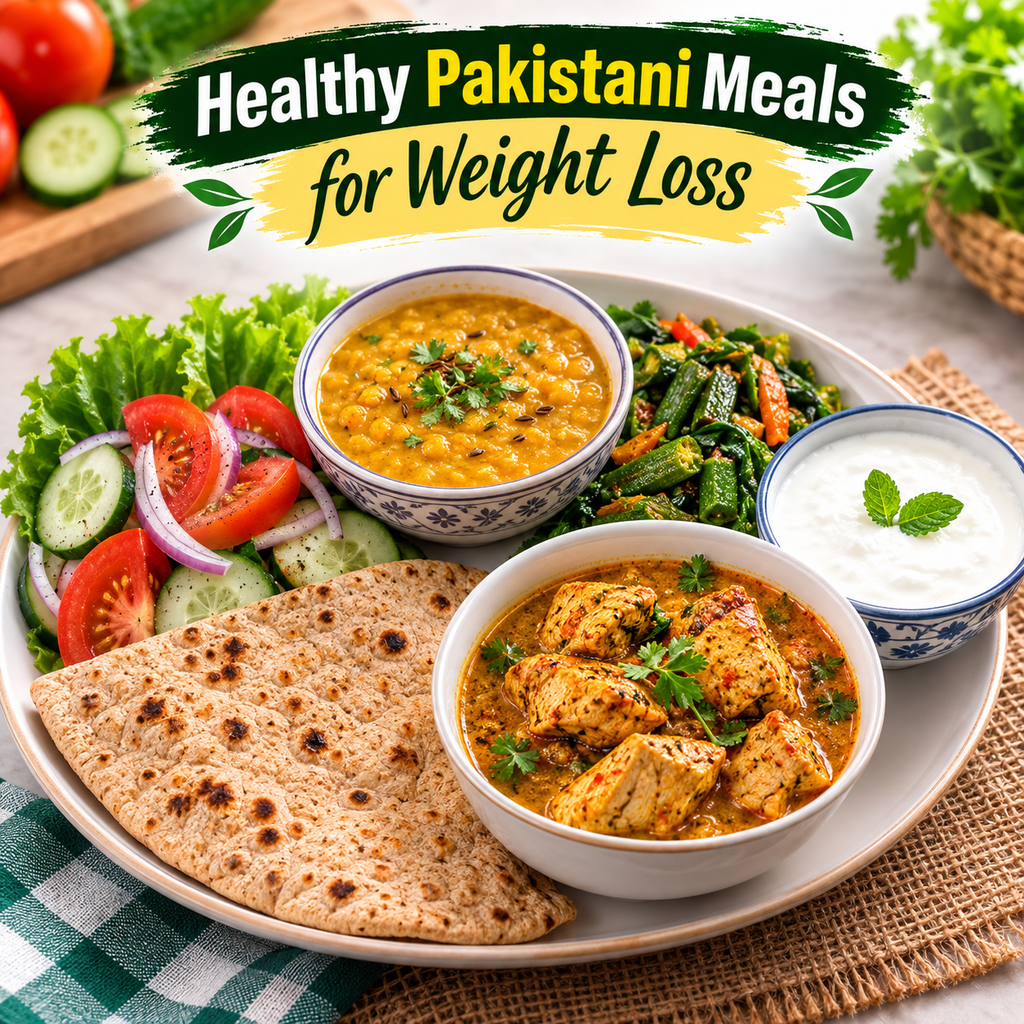
Day 5 — Easy Pakistani-Style Weight Loss Meals
Healthy eating does not mean giving up traditional Pakistani foods.
The key is to modify cooking methods, control portions and include plenty of vegetables and protein.
You don’t have to give up traditional Pakistani food while trying to eat healthier. See our guide to healthy Pakistani recipes for more ideas.
Breakfast
- 2 boiled or lightly scrambled eggs
- 1 small whole-wheat roti
- Cucumber and tomato
- Unsweetened tea
Lunch
Light Chicken Curry
- 100–120 g chicken
- Tomato-based curry
- Minimal added oil
- 1 small whole-wheat roti
- Large salad
- ½ cup plain yogurt
Snack
- 1 guava or apple
- 8–10 almonds
Dinner
Daal & Vegetable Plate
- ¾–1 cup cooked lentils
- Mixed vegetable sabzi
- Large salad
- ½ small roti if needed

Day 5 Tip
You don’t have to give up roti or rice for weight loss. Start by reducing oversized portions and increasing vegetables and lean protein.
Day 6 — High-Fiber Vegetarian Day
Breakfast
Chia Oatmeal
- ½ cup oats
- Low-fat milk or unsweetened soy milk
- 1 tablespoon chia seeds
- ½ banana
- Cinnamon
Lunch
Lentil & Vegetable Bowl
- 1 cup cooked lentils
- Mixed vegetables
- Fresh salad
- ½ cup plain yogurt
Snack
- Plain Greek yogurt
- ½ cup berries
Dinner
Chickpea Vegetable Stir-Fry
- ¾ cup chickpeas
- Broccoli
- Bell peppers
- Spinach
- Zucchini
- ½ cup cooked brown rice
Day 6 Tip
Beans, chickpeas and lentils are especially useful additions to a plant-forward meal plan because they provide both protein and fiber.
Day 7 — Simple & Sustainable
Breakfast
Vegetable Egg Omelet
- 2 eggs
- Spinach
- Tomato
- Onion
- 1 slice whole-grain toast
- 1 small fruit
Lunch
Grilled Chicken Bowl
- 120 g grilled chicken
- ½ cup cooked brown rice
- Mixed vegetables
- Fresh salad
- Yogurt dressing
For another easy chicken-and-rice option, try our Grilled Chicken Rice Bowl.
Snack
- 1 piece of fruit
- 10–12 pistachios or almonds
Dinner
Fish or Chicken & Vegetables
- 120–150 g baked or grilled fish/chicken
- Large serving of roasted vegetables
- ½ small baked potato OR ½ cup cooked rice
- Side salad
Day 7 Tip
Don’t think of the seventh day as the end of a diet. The goal is to develop eating habits that you can continue beyond one week.
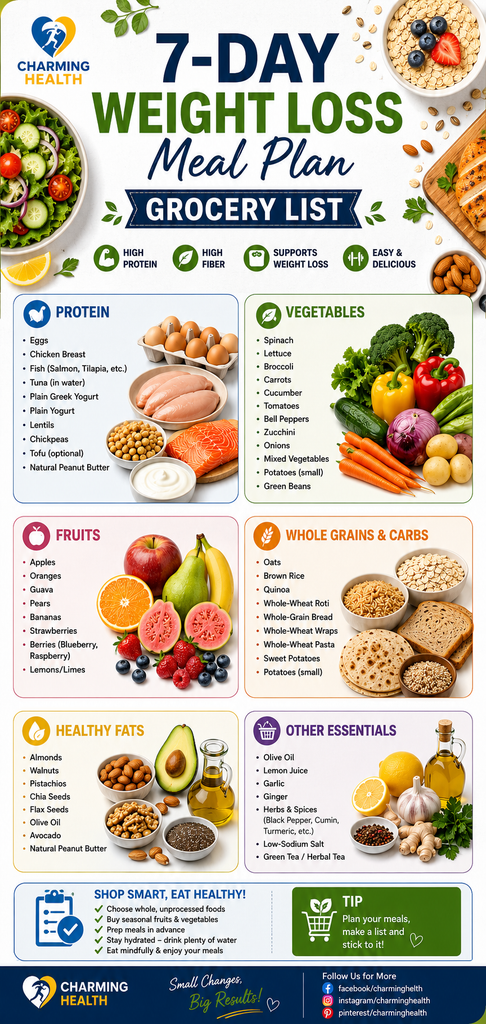
7-Day Grocery List
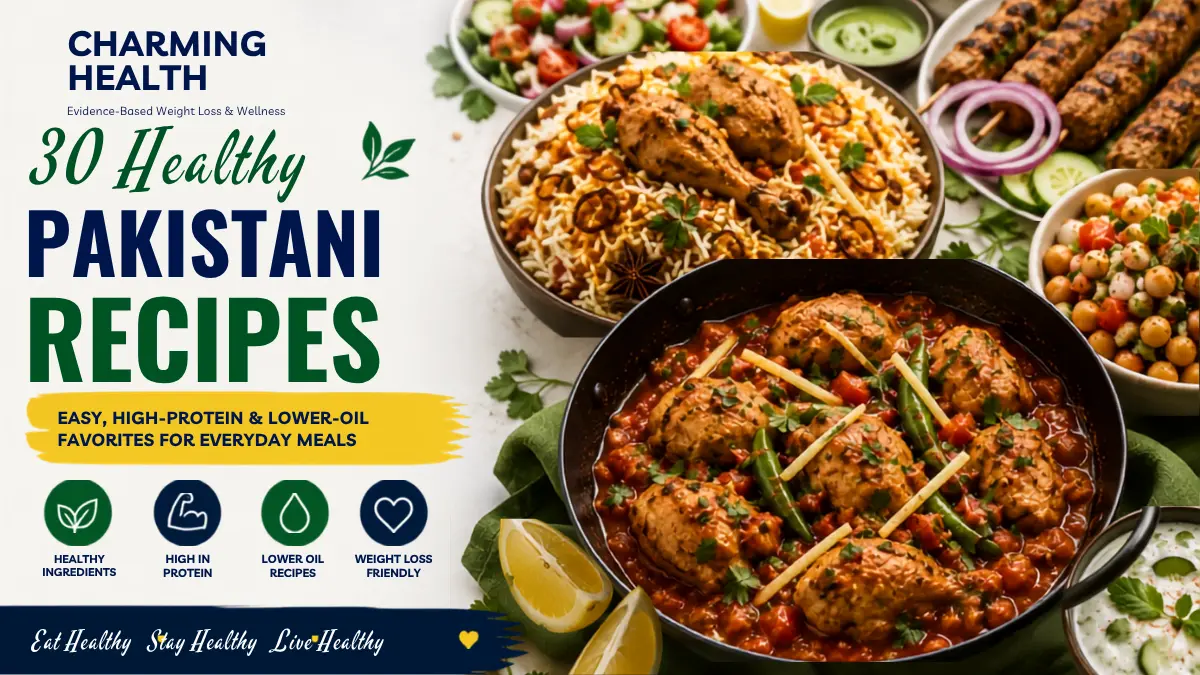
Make healthy eating easier with this 7-day weight loss grocery list. It includes the protein, vegetables, fruits, whole grains, healthy fats, and pantry essentials you’ll need to prepare the meals in this plan.

Meal Prep Tips for a Busy Week
You don’t need to cook four completely different meals every day.
Try preparing a few basics ahead of time.
Prepare Protein
Cook several portions of:
- Grilled chicken
- Boiled eggs
- Baked fish
Store them safely in the refrigerator and use them in salads, wraps and bowls.
Prepare Vegetables
Wash and chop vegetables in advance.
Keep options such as cucumber, carrots, bell peppers and salad greens ready to use.
Cook Whole Grains
Prepare a batch of brown rice or another whole grain so you can quickly add a controlled portion to lunch or dinner.
Prepare Legumes
Cook lentils and chickpeas in advance or use convenient low-sodium canned options.
Keep Healthy Snacks Visible
Keep fruit, yogurt and portioned nuts where you can easily see them.
This can make it easier to choose nutritious foods when hunger strikes.
Easy Food Swaps for Weight Loss
You don’t have to completely change your favorite meals.
Try these simple swaps:
| Instead of | Try |
| Sugary soda | Water or sparkling water |
| Sweetened tea | Unsweetened tea |
| White bread | Whole-grain bread |
| Fried chicken | Grilled or baked chicken |
| Chips | Fruit + nuts |
| Creamy dressing | Yogurt + lemon dressing |
| Large rice portion | Smaller rice portion + extra vegetables |
| Fried snacks | Roasted or air-fried alternatives |
| Sugary yogurt | Plain yogurt + fruit |
| Pastries | Fruit + Greek yogurt |
The goal is not perfection. Small, consistent changes can make a healthy eating pattern easier to maintain. For more practical strategies beyond meal planning, see our guide on how to lose weight naturally at home.
What to Drink for Weight Loss
Water should be your main beverage.
Other options can include:
- Unsweetened tea
- Unsweetened coffee
- Sparkling water without added sugar
- Water with lemon or cucumber
Try to limit beverages that provide lots of added sugar, such as regular soda, sweetened iced tea and sugary coffee drinks.
Remember that liquid calories can add up quickly without making you feel as satisfied as a balanced meal.
How Much Weight Can You Lose in 7 Days?
This is one of the most common questions people ask when starting a weight-loss meal plan.
The answer varies.
Your weight can change during a week because of changes in body water, food intake, sodium, digestion and other factors, not just body fat.
Rather than trying to lose as much weight as possible in seven days, focus on building habits you can maintain.
The CDC notes that people who lose weight gradually—about 1–2 pounds per week—are generally more likely to keep it off than people who lose weight more quickly. (CDC)
Your individual results can be different, so don’t judge your progress based only on the scale.
Frequently Asked Questions
Can I eat rice while trying to lose weight?
Yes. You don’t necessarily need to eliminate rice. A better strategy is to control the portion and combine rice with protein and plenty of vegetables.
Can I eat roti during weight loss?
Yes. Choose whole-wheat roti when possible and pay attention to portion size. Pair it with vegetables, lentils, chicken, fish or another protein source.
Is this a 1,200-calorie meal plan?
No. This is intentionally presented as a general meal plan rather than a fixed 1,200-calorie diet because calorie requirements differ significantly between individuals.
Can vegetarians follow this meal plan?
Yes. Replace chicken and fish with foods such as lentils, chickpeas, beans, tofu, Greek yogurt or other suitable protein sources.
Can I change the meals?
Absolutely.
If you don’t like a particular meal, choose another meal with a similar structure:
Protein + vegetables/fruit + high-fiber carbohydrate + small amount of healthy fat.
Can I have snacks while trying to lose weight?
Yes. Snacks can fit into a healthy eating pattern. Choose nutrient-dense options such as fruit, plain yogurt or a small portion of nuts, and consider whether you are actually hungry before snacking.
Do I have to exercise with this meal plan?
Physical activity is an important part of a healthy lifestyle and can support weight management. Healthy weight management also involves nutrition, sleep and stress management. (CDC)
Final Thoughts
A successful weight-loss meal plan should be healthy, realistic and sustainable.
You don’t need to eliminate carbohydrates, survive on salads or follow an extreme seven-day diet. Instead, build your meals around nutritious foods such as lean protein, vegetables, fruits, legumes, whole grains and healthy fats.
This 7-day plan gives you a starting point. Once you become comfortable with the portions and meal combinations, you can mix and match the meals to create a routine that fits your lifestyle.
Most importantly, remember that one week is only a starting point. Sustainable weight management comes from habits you can continue for months and years—not from a temporary crash diet. (CDC)
Healthy eating. Real food. Sustainable habits. That’s the Charming Health approach.