
This article has been reviewed for factual accuracy based on USDA nutritional data and established health guidelines. Content is for informational purposes only and does not replace professional medical advice , consult a qualified professional.
Have you ever finished dinner and wished you could settle down with a soothing drink before bed? The right evening drink can be a simple part of a healthy nighttime routine. Depending on your needs, you might prefer warm ginger tea, caffeine-free chamomile tea, fennel seed water, or a comforting cup of turmeric milk.
But can bedtime drinks really improve gut health, reduce bloating, or help with weight loss? The answer depends on the drink, your overall diet, and what is causing your symptoms.
In this guide, we’ll explore seven easy bedtime drinks for gut health and digestion, how to prepare them at home, and what to know before adding them to your routine. You’ll also learn which drinks may be less suitable if you experience acid reflux or a sensitive stomach.
Quick answer: Plain water and unsweetened, caffeine-free herbal teas are simple evening choices for many people. However, no bedtime drink can detox your body, melt belly fat overnight, or guarantee better digestion. Long-term gut health depends on your overall eating habits, hydration, sleep, movement, and individual health needs.
What Are the Best Bedtime Drinks for Gut Health?
The best drink before bed is one that suits your body, contains little or no added sugar, and does not trigger discomfort.
Here are seven options to consider:
- Ginger tea
- Chamomile tea
- Fennel seed water
- Warm turmeric milk
- Plain warm water
- A diluted apple cider vinegar drink
- A small serving of food-grade aloe vera juice, if appropriate
Not every drink is suitable for everyone. Some people find acidic drinks uncomfortable, while others may need to avoid certain herbal products because of medications or medical conditions.
Let’s look at each option and how to prepare it.
1. Ginger Tea
Ginger tea is a popular warm drink made with fresh ginger and water. Its spicy, aromatic flavor makes it a comforting choice after dinner, especially when you want something without caffeine.
Ginger has been studied for several health uses, but evidence for specific digestive benefits varies. Drinking ginger tea should not be considered a treatment for persistent bloating, reflux, or other digestive conditions.
How to Make Ginger Tea
Ingredients
- 1 cup water
- 3–4 thin slices of fresh ginger
- A small slice of lemon, optional
Instructions
- Bring the water to a gentle boil.
- Add the sliced ginger.
- Simmer for 5–8 minutes.
- Strain into a cup and allow it to cool slightly.
- Add a little lemon only if it suits your stomach.
Enjoy it warm rather than very hot. You can leave out the lemon if acidic drinks trigger heartburn.
Best time to drink: After dinner or during your evening wind-down, provided it does not cause discomfort.
Keep in mind: Ginger may cause heartburn, abdominal discomfort, or throat irritation in some people. If you take regular medication, ask your healthcare professional whether concentrated ginger products are appropriate for you.

2. Chamomile Tea
Chamomile tea is a naturally caffeine-free herbal infusion with a mild, floral taste. Many people enjoy it as part of a relaxing bedtime routine.
Although chamomile is traditionally used for relaxation and sleep, scientific evidence supporting its effectiveness for insomnia remains limited. It should not be presented as a guaranteed sleep aid or a proven digestive treatment.
How to Make Chamomile Tea
Ingredients
- 1 chamomile tea bag or the amount recommended on the package
- 1 cup hot water
Instructions
- Place the tea bag in a cup.
- Pour hot water over it.
- Cover and steep for 5 minutes, or follow the package instructions.
- Remove the tea bag and let the tea cool to a comfortable temperature.
Avoid adding several spoonfuls of sugar or honey if you are trying to reduce added sugar.
Why try it? It offers a caffeine-free alternative to regular tea and can help make your evening routine feel calm and consistent.
Safety note: Chamomile may cause allergic reactions, particularly in people sensitive to ragweed or related plants. It may also interact with certain medications, including warfarin and sedatives. Check with your healthcare professional if you take medication or have a relevant allergy.
For more information, read the National Center for Complementary and Integrative Health’s chamomile guide.

3. Fennel Seed Water
Fennel seeds are commonly used in South Asian cooking and traditional after-meal routines. Their mild, slightly sweet flavor makes fennel water an easy drink to prepare at home.
Some people enjoy fennel after meals, but strong scientific evidence that fennel water treats bloating or improves gut health is limited. It is best viewed as an optional beverage rather than a remedy.
How to Make Fennel Seed Water
Ingredients
- 1 cup water
- ½ teaspoon fennel seeds
Instructions
- Bring the water to a boil.
- Add the fennel seeds.
- Simmer for about 3–5 minutes.
- Turn off the heat and let the mixture steep for another few minutes.
- Strain and allow it to cool before drinking.
You can also steep lightly crushed fennel seeds in hot water if you prefer a milder flavor.
Best time to drink: After dinner or in the evening, depending on your preference.
Helpful tip: Start with a small serving and notice how your body responds. More is not necessarily better, especially when using herbs regularly.
If you are pregnant, breastfeeding, have a hormone-sensitive condition, or take medication, seek professional advice before using concentrated fennel preparations.

4. Warm Turmeric Milk
Warm turmeric milk is a familiar drink in many households. Made with milk and a small amount of turmeric, it can be a comforting alternative to sweetened nighttime beverages.
Turmeric contains curcumin, a compound that has been researched for various health effects. However, evidence does not establish that a small cup of turmeric milk at bedtime detoxes the body, burns belly fat, or improves gut health in everyone.
How to Make Turmeric Milk
Ingredients
- 1 cup milk or unsweetened fortified plant-based milk
- ¼ teaspoon ground turmeric
- A small pinch of cinnamon, optional
Instructions
- Pour the milk into a small saucepan.
- Add the turmeric and optional cinnamon.
- Warm gently while stirring.
- Remove from the heat before it reaches a vigorous boil.
- Serve warm.
Choose a milk option that suits your dietary needs. If regular milk causes gas or bloating, try lactose-free milk or a suitable unsweetened alternative.
Is turmeric milk good before bed?
It may be an enjoyable part of your nighttime routine, but its benefits should not be overstated. Turmeric can cause stomach upset or worsen acid reflux in some people, and concentrated curcumin supplements may carry additional risks.
Use culinary amounts rather than high-dose supplements unless a healthcare professional recommends otherwise.
5. Plain Warm Water
Sometimes the simplest option is the most practical. Plain water supports hydration without adding sugar, caffeine, or unnecessary ingredients.
Warm water is not proven to melt fat or cleanse the gut more effectively than water at other comfortable temperatures. However, drinking enough fluid throughout the day helps your body function normally and can support regular bowel movements when combined with adequate dietary fiber.
How to Make Warm Water Part of Your Routine
Ingredients
- 1 cup drinking water
Instructions
- Heat the water until comfortably warm.
- Let it cool to a safe drinking temperature.
- Sip slowly if you enjoy warm drinks.
There is no special requirement to drink it immediately before sleeping. If drinking late at night makes you wake up repeatedly to use the bathroom, have more of your fluids earlier in the day.
Helpful tip: Hydration works best as a daily habit, not as a large amount of water consumed all at once before bed.
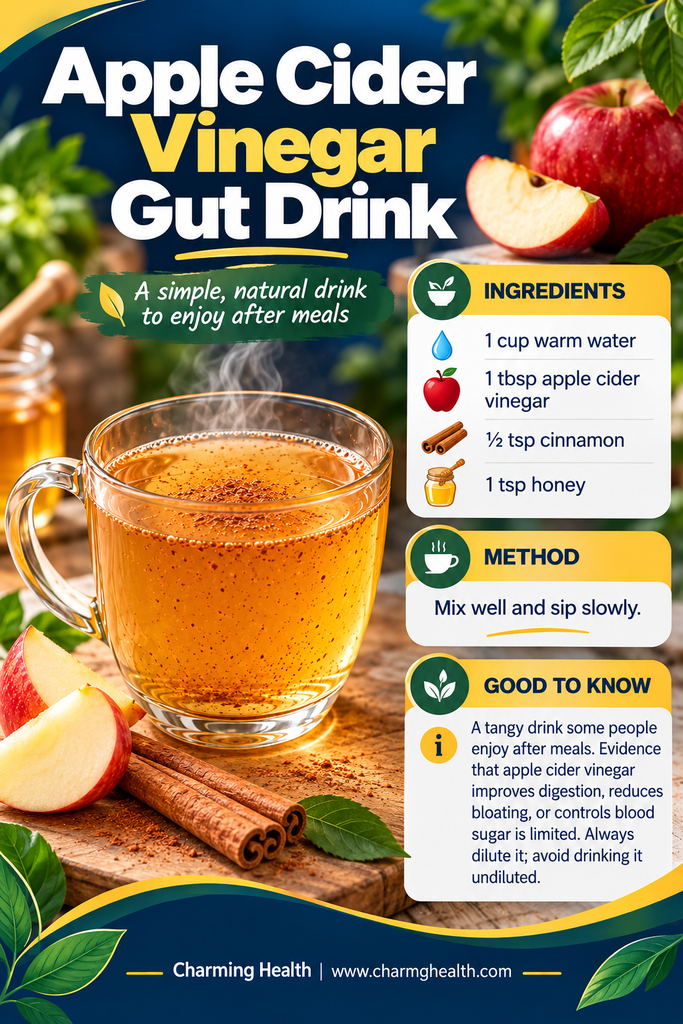
6. Apple Cider Vinegar Drink
Apple cider vinegar is often promoted online as a bedtime drink for weight loss, digestion, and blood sugar control. However, claims that it burns belly fat overnight or detoxes the digestive system are not supported by strong evidence.
If you enjoy its taste, understand the precautions before trying it. Apple cider vinegar is acidic and may worsen heartburn or irritate the throat. Frequent exposure may also damage tooth enamel.
How to Prepare a Diluted Apple Cider Vinegar Drink
Ingredients
- 1 cup water
- Up to 1 teaspoon apple cider vinegar, optional
Instructions
- Add the vinegar to the water.
- Stir thoroughly.
- Never drink apple cider vinegar undiluted.
- Stop using it if you notice burning, reflux, nausea, or stomach discomfort.
This drink is optional; there is no need to add it to your routine for gut health or weight loss.
Should you drink apple cider vinegar before bed?
There is no established bedtime advantage. If you experience acid reflux, it may be better to avoid it. If you have diabetes, take glucose-lowering medication, or have another medical condition, discuss regular use with your healthcare professional.
You can also read our related guide on apple cider vinegar in the morning for more information about its uses and precautions.
7. Aloe Vera Juice
Aloe vera beverages are frequently marketed for digestion and gut health. However, the evidence for many of these claims is limited, and oral aloe products are not all equally safe.
Some aloe preparations contain aloe latex or other compounds that can cause abdominal cramps and diarrhea. Oral aloe leaf extracts have also been associated with reports of liver injury.
For this reason, aloe vera juice should not be a first-choice bedtime drink or a routine remedy for bloating.
What to Know Before Using Aloe Vera Juice
If you are considering a drinkable aloe product:
- Choose a clearly labelled, food-grade product intended for oral consumption.
- Avoid aloe latex and products with unclear ingredients.
- Follow the product label and do not assume that a natural product is automatically safe.
- Ask a healthcare professional before use if you take medication or have an underlying health condition.
- Avoid oral aloe during pregnancy or breastfeeding unless your healthcare professional specifically advises otherwise.
My recommendation: Plain water or a simple caffeine-free herbal tea is generally a more straightforward option for an evening routine.
For detailed safety information, consult the NCCIH guide to aloe vera.
Which Bedtime Drink Is Best for Bloating?
There is no single drink that works for everyone with bloating. The most useful choice depends on what triggers your symptoms.
Here is a simple comparison:
| Drink | Why you might choose it | Important consideration |
|---|---|---|
| Ginger tea | A warm, caffeine-free option if prepared without caffeinated ingredients | May trigger heartburn in some people |
| Chamomile tea | A mild drink for a relaxing evening routine | Evidence for sleep benefits is limited; check medication interactions |
| Fennel seed water | A traditional after-meal beverage | Evidence for treating bloating is limited |
| Turmeric milk | A comforting warm drink | Milk may cause symptoms if you are lactose intolerant |
| Plain warm water | Helps you maintain hydration | Warm water has no special fat-burning effect |
| Apple cider vinegar water | An optional drink for people who enjoy its taste | Acidity may worsen reflux and affect tooth enamel |
| Aloe vera juice | A product sometimes marketed for digestive health | Oral products carry safety concerns and are not necessary for gut health |
If bloating happens frequently, pay attention to your meals, portion sizes, eating speed, and individual food triggers. Persistent symptoms deserve medical assessment rather than repeated attempts to treat them with drinks.
Can Bedtime Drinks Help You Lose Weight?
Bedtime drinks alone will not produce meaningful, sustainable weight loss. No tea, infused water, or vinegar drink can selectively burn belly fat while you sleep.
However, a healthy drink can support your routine when it replaces a high-calorie sugary beverage. For example, choosing unsweetened herbal tea instead of a sugar-sweetened drink may reduce your overall added-sugar intake.
For sustainable weight management, focus on habits that work together:
- Eat balanced meals with adequate protein and fiber.
- Include vegetables, fruit, legumes, and whole grains as appropriate for your needs.
- Choose portions that support your energy requirements.
- Stay hydrated throughout the day.
- Build regular physical activity into your routine.
- Maintain a consistent sleep schedule.
- Avoid crash diets and products that promise rapid fat loss.
For a practical starting point, explore our 7-Day Weight Loss Meal Plan. It provides meal ideas to help you build a more balanced eating routine.
You may also like our guide to 10 Best Breakfast Foods for Fast and Healthy Weight Loss.
What Is a Probiotic Drink?
A probiotic drink is a beverage that contains live microorganisms that may provide health benefits when consumed in adequate amounts. Examples may include certain yogurt drinks, kefir, and other beverages specifically formulated with probiotic cultures.
Probiotics are often called “good bacteria” because certain strains may support digestive health. However, not every fermented drink contains proven probiotics, and the potential benefits depend on the specific microorganisms in the product.
When choosing a probiotic drink, check the label for live cultures, added sugar, and the specific probiotic strains. Choose an option that suits your dietary needs, and remember that probiotic drinks are not a guaranteed treatment for bloating or digestive problems.
How to Improve Gut Health Naturally
Although a soothing drink can be part of your evening routine, your overall diet and lifestyle matter much more than any single beverage.
1. Eat More Fiber-Rich Foods Gradually
Vegetables, fruits, oats, whole grains, beans, and lentils provide dietary fiber. Fiber can support regular bowel movements, but increasing it too quickly may cause gas or bloating. Increase your intake gradually and drink enough water.
2. Include Foods You Tolerate Well
Plain yogurt with live cultures may be a useful choice for some people. Other options include vegetables, fruit, and legumes. Your ideal diet depends on your preferences, tolerance, and health needs.
3. Stay Hydrated Throughout the Day
Water helps your body function normally and supports bowel regularity. Do not rely on a bedtime drink to make up for inadequate hydration during the day.
4. Eat at a Comfortable Pace
Eating quickly, consuming very large meals, or drinking fizzy beverages may contribute to discomfort in some people. Try eating slowly and notice whether particular habits trigger symptoms.
5. Avoid Lying Down Immediately After Dinner
If you experience heartburn or acid reflux at night, consider finishing meals at least three hours before lying down. Certain acidic drinks, including apple cider vinegar and lemon-based drinks, may aggravate symptoms.
6. Build a Consistent Sleep Routine
A regular bedtime and a relaxing wind-down routine can support overall well-being. You do not need a special detox drink to establish healthier habits.
For a structured approach to everyday eating, visit our 14-Day Gut Reset Diet Plan. It offers practical ideas for building a more balanced, gut-friendly routine.
A Simple Bedtime Drink Routine for Beginners
You do not need to drink all seven beverages or follow a complicated schedule. Choose one drink that suits you and keep your routine simple.
Here is an example:
- After dinner: Drink water if you are thirsty.
- During your evening wind-down: Enjoy a cup of chamomile or ginger tea if you tolerate it.
- Before bed: Avoid forcing yourself to drink extra fluids if doing so interrupts your sleep.
- Throughout the day: Eat balanced meals, drink enough water, and include fiber-rich foods gradually.
Treat this as a flexible routine rather than a strict plan. You can skip herbal drinks entirely and still maintain healthy habits.
Frequently Asked Questions
What is the best drink to have before bed for gut health?
There is no universally best drink for gut health. Plain water is a simple hydration choice, while unsweetened, caffeine-free herbal tea can be enjoyable for some people. Your overall diet and the cause of any digestive symptoms matter more than a specific bedtime drink.
Which bedtime drink is best for bloating?
No bedtime drink is proven to relieve bloating in everyone. Some people enjoy ginger tea or fennel seed water, but strong evidence for these drinks as bloating treatments is limited. If bloating is frequent, severe, or persistent, seek medical advice.
What Drinks Are Good for Gut Health?
Water, unsweetened herbal teas, and yogurt drinks or kefir containing live cultures can support a gut-friendly routine. Choose drinks low in added sugar and stay hydrated. References: NHS | CDC
Can I drink ginger tea every night?
Many adults can enjoy ginger in ordinary food or tea amounts, but individual tolerance varies. Ginger may cause heartburn or stomach discomfort and may interact with some medications. If you plan to consume it regularly while taking medication, check with your healthcare professional.
Does apple cider vinegar before bed burn belly fat?
No reliable evidence establishes that drinking apple cider vinegar before bed burns belly fat. It is acidic and may aggravate reflux or affect tooth enamel. Sustainable weight loss depends on your overall eating habits, activity, and energy balance.
Is turmeric milk good before sleeping?
Turmeric milk can be a comforting warm drink, but it is not a proven sleep treatment or weight-loss remedy. Choose a milk option you tolerate and use turmeric in ordinary culinary amounts. Avoid it if it triggers reflux or discomfort.
Are bedtime detox drinks necessary?
No. Your liver and kidneys perform the body’s normal waste-processing functions. You do not need a special drink to detox your body. Focus on hydration, balanced meals, sleep, and appropriate medical care.
Should I drink water immediately before bed?
You can drink water if you are thirsty, but you do not need to force yourself to drink a large amount immediately before sleeping. If nighttime bathroom trips disturb your sleep, try drinking more fluids earlier in the day.
Final Thoughts
The best bedtime drinks for gut health are not necessarily the trendiest ones. A simple cup of ginger tea, chamomile tea, fennel seed water, or plain warm water may fit comfortably into your evening routine, depending on your preferences and tolerance.
Remember that no drink can guarantee better digestion, cure persistent bloating, or burn belly fat overnight. Sustainable gut health starts with balanced meals, adequate hydration, regular movement, and habits that you can maintain.
Start with one simple option, pay attention to how you feel, and avoid drinks that trigger discomfort. If digestive symptoms persist or worsen, consult a qualified healthcare professional.
For more practical wellness guidance, explore the healthy eating resources at Charming Health.
Health disclaimer: This article is for general educational purposes and is not a substitute for individual medical advice. Herbal products can have side effects and interact with medicines. Consult a qualified healthcare professional if you have a medical condition, take medication, are pregnant or breastfeeding, or are concerned about persistent digestive symptoms.
References for Further Reading
- National Center for Complementary and Integrative Health: Chamomile
- National Center for Complementary and Integrative Health: Ginger
- National Center for Complementary and Integrative Health: Turmeric
- National Center for Complementary and Integrative Health: Aloe Vera
- National Institute of Diabetes and Digestive and Kidney Diseases: Eating, Diet, and Nutrition for Acid Reflux
- NIH Office of Dietary Supplements — Probiotics Fact Sheet for Consumers